One year on, Digital Omnibus may face delays

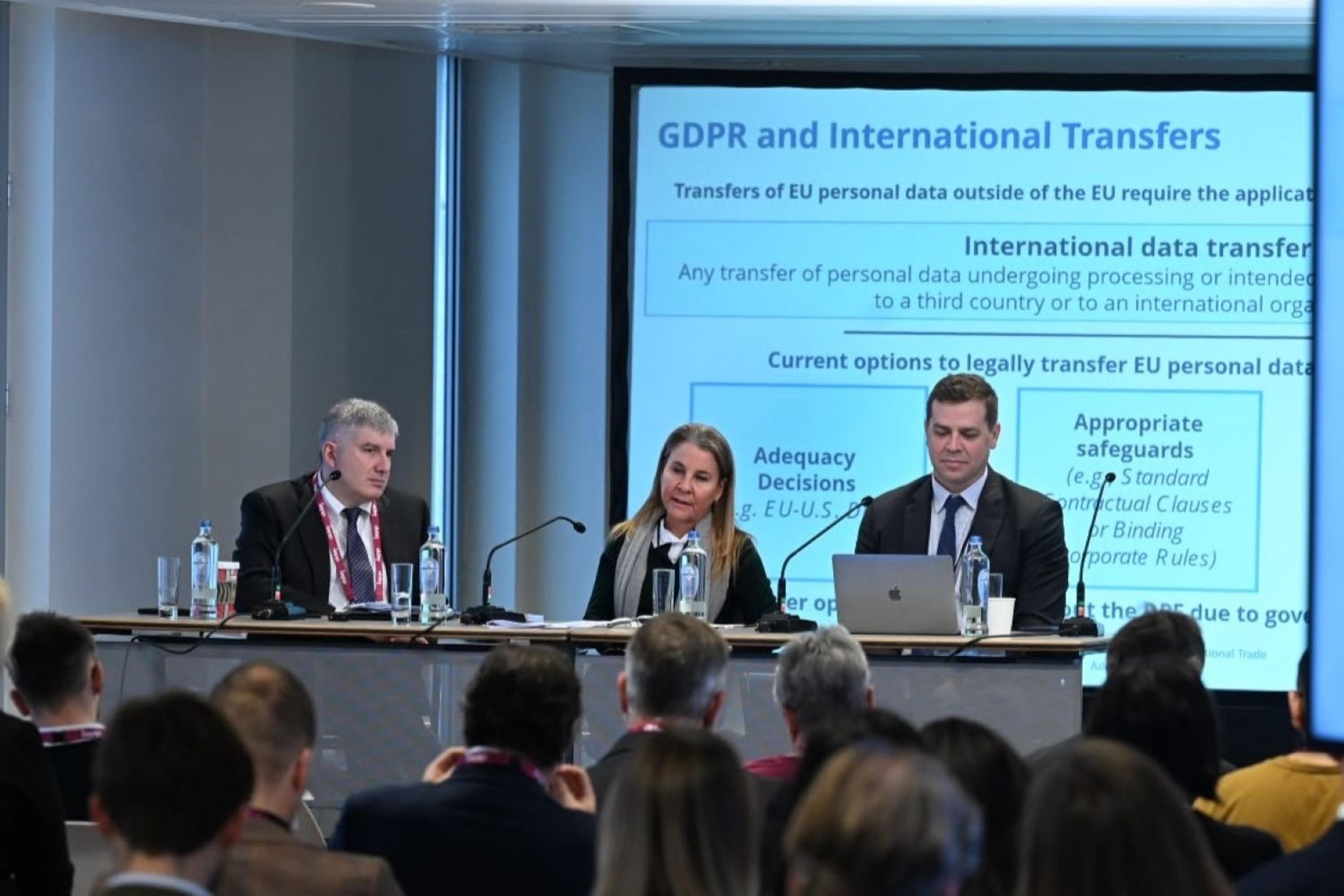
The EU's proposed Digital Omnibus faces some political headwinds heading into 2027, according to a panel session at the IAPP Europe Congress 2026.
Contributors:
Jedidiah Bracy
Editorial Director
IAPP
Exactly one year after the European Commission proposed significant reforms to the EU General Data Protection Regulation, stakeholders from the European Parliament, Commission and industry discussed its state of play, intimating the timeline for agreement could be extended by months.
Speaking at the IAPP Europe Congress 2026, Kai Zenner, Head of Office and Digital Policy Advisor to MEP Axel Voss, said he expects parliamentary negotiations to extend beyond the oft-cited February 2027 deadline.
In October, the Council of the European Union agreed to its position on simplifying data protection, privacy and cyber reporting rules. The Council is one of three EU institutions involved in negotiating the final legislation. The European Commission released its Digital Omnibus Regulations Proposal 19 November 2025.
The European Parliament must now agree to its position in order for the three institutions to move the Omnibus forward.
Zenner said, "We feel it's rather unrealistic to meet the February (2027) deadline," adding, "I think it's more realistic to speak about Easter or something like that, which of course will drag out the timetable further. But maybe I'm wrong. Maybe there's a surprise."
With the year nearing its end and the forthcoming holidays around the corner, a more likely timeline would move it back by a couple months.
On the one hand, those advocating for stronger data protection fear the Omnibus leans toward too much deregulation, while industry voices argue the proposal remains too cautious.
Zenner said there has been more pushback to the Digital Omnibus than was expected. The Commission had hoped the omnibus packages would be quick fixes, but Zenner suggested "momentum for the larger reforms has been slowed somewhat."
He said some of the biggest issues are not yet resolved, including questions related to the Data Act and trade secret exemptions. "If there is going to be a package deal, that package needs to be created. All of that will take time," he said.
The European Commission's view
Karolina Jojzesowicz, Deputy Head of Unit, Data Protection for the European Commission, said it is focusing on stakeholder response that requests clearer guidance and a stronger expression of the GDPR's risk-based approach.
She also pointed to reducing obligations for small businesses that do not process large amounts of data. Providing more legal certainty is also a focus as it "translates into a reduction of burdens because it reduces the need for costly legal advice," she said. "Let's be clear, small businesses generally have fewer resources to engage in extensive legal analysis."
Jojzesowicz said key elements of the Commission's proposal include clarifying what constitutes personal data, reducing obligations for low-risk processing by small businesses, clarifying access rights and data protection impact assessment requirements, as well as reducing duplicative reporting obligations.
"Legal certainty translates into a reduction of burden" for companies, she said.
Training AI models and its discontents
Google Public Policy Manager Pierre Devoize identified the legitimate-interest provision for AI training as among the most important proposed changes. He suggested that companies need legal certainty for AI model development and warned that uncertainty here could drive European businesses toward non-European AI providers.
His answer came in response to a question from the panel's moderator, Future of Privacy Forum EU Senior Policy Counsel Vincenzo Tiani, who asked what each panelist would prioritize if they could get one provision through the negotiations.
"I would choose confirmation of legitimate interests as a basis for AI processing and AI training, preferably in line with the Council text," Devoize said. "That would provide durable legal certainty not only for the largest companies but also for organizations fine-tuning AI models."
Jojzesowicz said she would support the Commission's proposal as a whole, "but if I had to choose one area, it would be clarifying when data are personal data. ... A clearer and more harmonized understanding would help the European data economy develop in a legally certain environment."
This content is eligible for Continuing Professional Education credits. Please self-submit according to CPE policy guidelines.
Word count: 642