A view from Brussels: Don't plan for the future, define it

Conversations at IAPP Europe Congress 2026 suggested that in an era of uncertainty, success may depend less on predicting the next regulatory development than addressing known challenges in AI, cybersecurity and digital governance.
Contributors:
Isabelle Roccia
CIPP/E
Managing Director, Europe
IAPP
Editor's note
The IAPP is policy neutral. We publish contributed opinion pieces to enable our members to hear a broad spectrum of views in our domains.
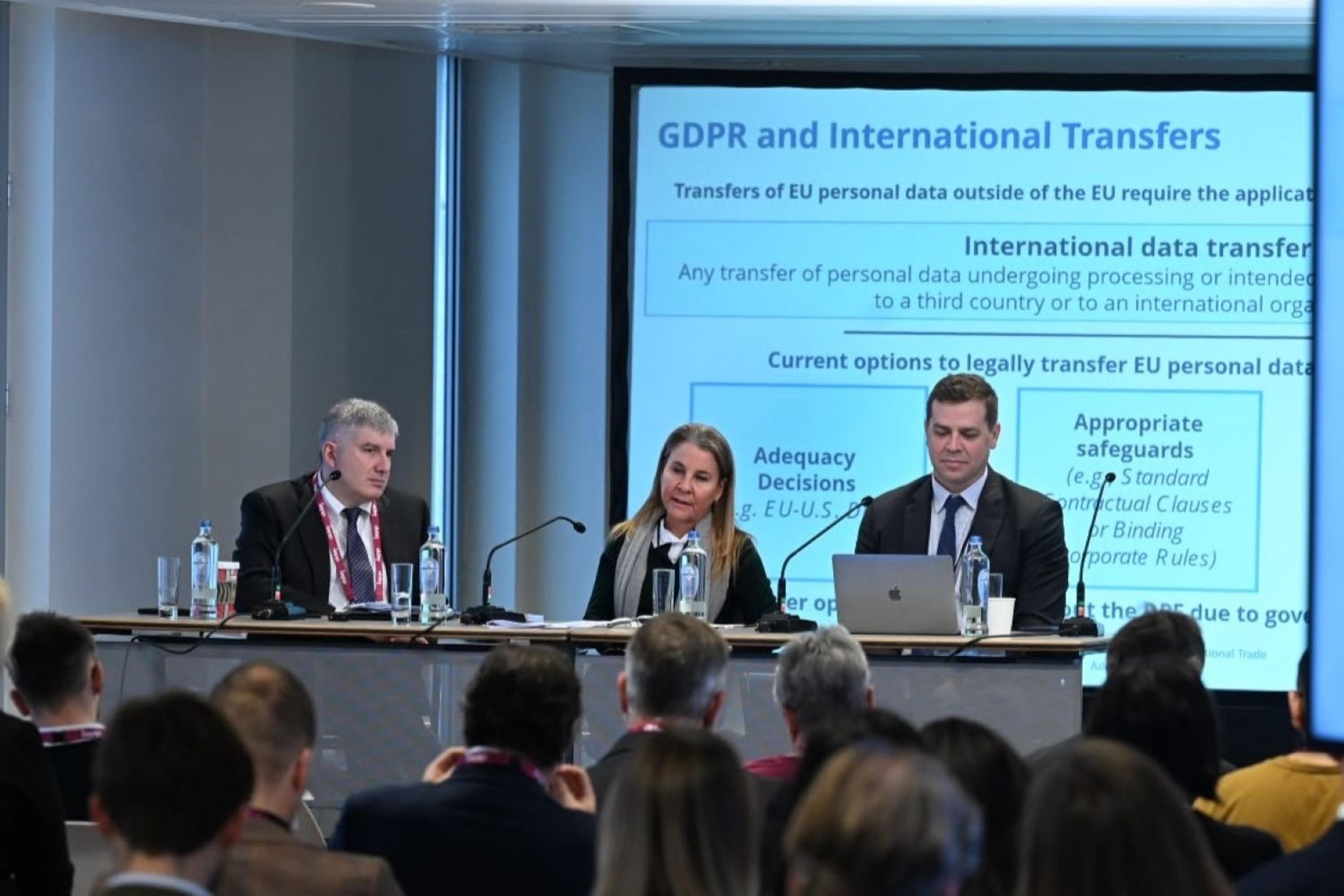
As the IAPP Europe Congress 2026 wraps in Brussels, I am reflecting on the themes of the week. In a world where predicting the future is a perilous exercise at best, many voices told us not to engage in prophecy or prediction. We are living in too uncertain times. Rather, let's look at what we know, what is actionable and what we can meaningfully achieve.
Professor Daniel Susskind reflected on the basics to help prepare the next generation for a workplace radically transformed by AI. "Numeracy, literacy, critical thinking" may be things AI is getting better at than humans. All the more reason to make sure we don't fail students and incoming workers by diminishing their importance in education.
Another area that defies the art of prediction is Brussels' appetite for simplification. I recently wrote about the predictability of Brussels' agenda, and I maintain the view that the general direction of travel is set, but at a macro level and over the long term.
Take the Digital Fitness Check expected next year. It fits perfectly into the European simplification and competitiveness ambitions. It could bring further changes to the EU digital rulebook, but the European Commission would not venture on what these changes might bring so I won't speculate.
However, several officials' remarks — including that of European Commissioner for Democracy, Justice, the Rule of Law and Consumer Protection Michael McGrath — underlined duplications across the AI Act, EU General Data Protection Regulation, Data Act, Digital Markets Act and Digital Services Act, as well as the importance of having workable solutions, reducing the cost of compliance complexity for companies and consumers alike.
The Digital Fairness Act proposal itself is expected to generate more than 10 billion euros in savings from protecting European consumers against unfair practices online. But predicting the outcome of the negotiations is impossible when one of the key questions is also member states' positions on the file. The Commission is hoping to avoid gold plating and members states building further onto the EU regulation, but consumer protection has historically been a rather territorial domain.
Since we cannot predict the future, let's focus on the present and things we do know. Some issues are clearly identified: the wave of AI-powered data subject access requests for organizations and regulators alike was one that came up many times, for example. The heightened public concern in cybersecurity vulnerability and data breaches was another driver of public concern and by extension regulators' attention. AI model training increasingly leveraging private data across messaging and personal spaces was another one that several regulators raised as an area of close attention.
Many conversations, thus, pointed to the need for structure. Digital risks exist no matter the regulatory framework and having the right people to address them and do the work is paramount at this time of unprecedented uncertainty.