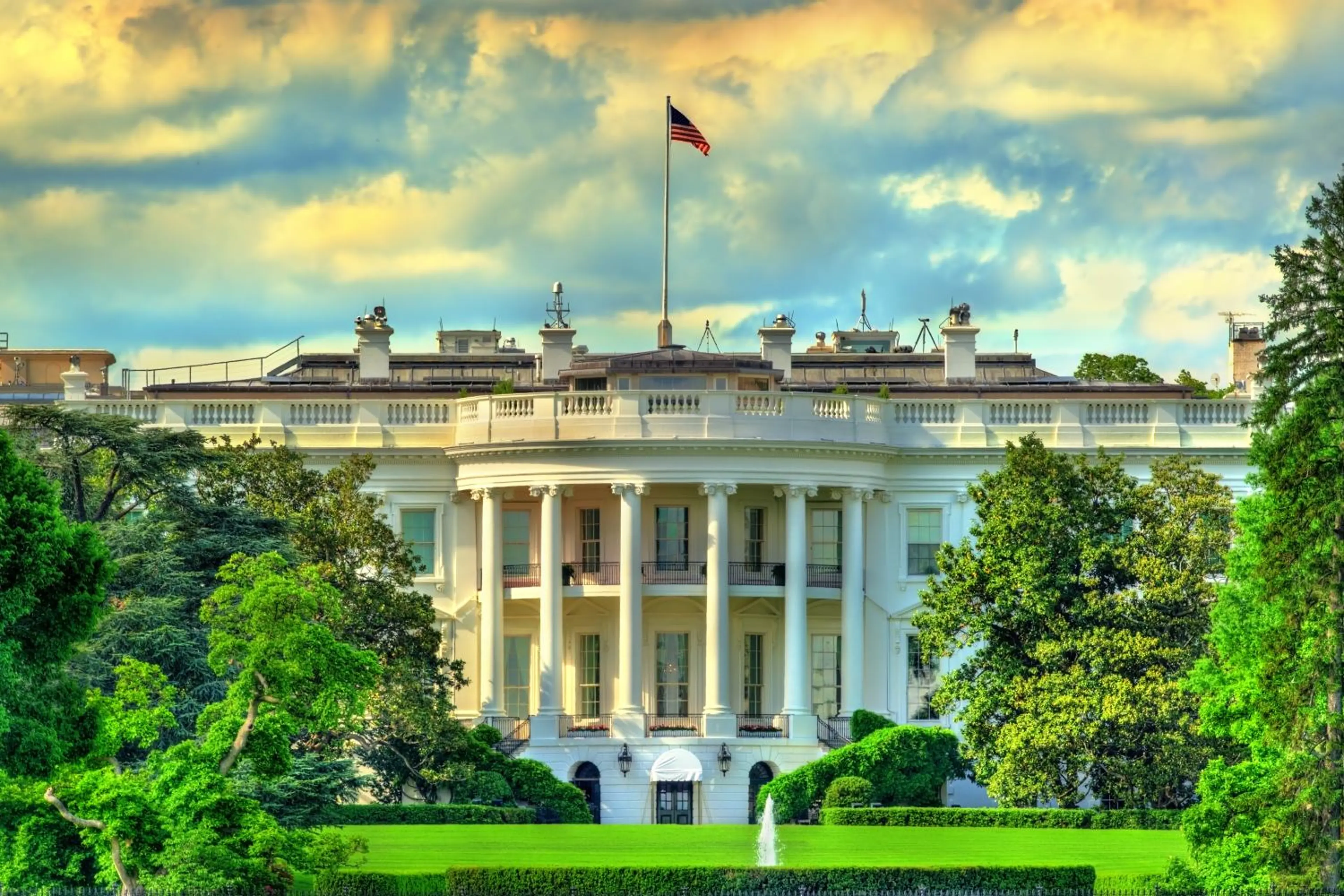
A view from DC: A sudden shift in gravity for AI politics
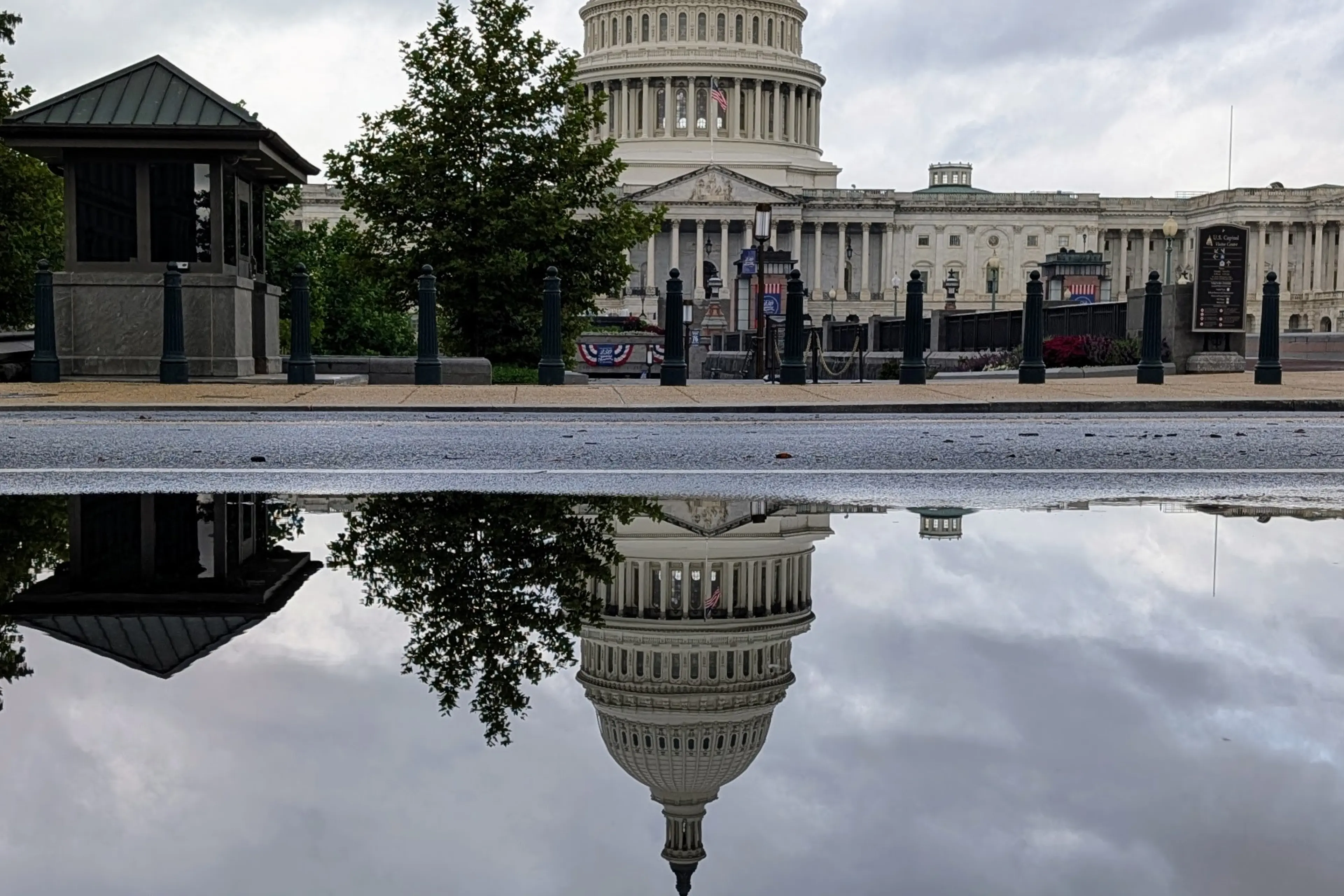
Instead of asking whether to regulate AI, Congress is asking how to build accountability without surrendering U.S. competitiveness.
Contributors:
Cobun Zweifel-Keegan
CIPP/US, CIPM
Managing Director, Washington D.C.
IAPP
Editor's note
Astronomers study an exoplanet known as WASP-12b, a gas giant locked in a doom spiral, dangerously close to its host star. The proximity leads to gravitational shear so severe that the planet is permanently deformed into an egg-like spheroid, as its star strips away billions of tons of matter from the atmosphere every second.
This week in Washington, the AI policy debate has felt a lot like WASP-12b, caught between the overwhelming weight of general political inertia and the extraordinary external forces that have placed AI governance at the top of the headlines.
The past week made clear a fact that neither party can afford to ignore: the development of advanced AI is a dinner table issue for Americans. It represents a perfect convergence of economic and social concerns, from fears of an over-leveraged investment bubble, to rising energy costs to a looming jobs crisis. The headlong rush toward development at any cost symbolizes for many voters their disconnect with elites in Silicon Valley, while underscoring the suspicion that their elected representatives are gambling with the future.
If high-profile control failures and frontier lab warnings weren't enough to awaken politicians to the importance of AI policy, polling seems to have done so. A new Politico poll, conducted at the same time Dario Amodei's warning letter was going viral, shows that American voters are taking existential AI threats seriously. Among Americans overall, 63% say there's at least a "moderate risk" of AI destroying humanity, versus just 22% who assign "no risk" or a "very small risk." And, as Nate Silver summarized, “the splits among Trump and Harris voters are 61-29 and 70-21 respectively. So, a slight gap if you squint, but a much narrower one than on almost any other contemporary issue.”
Catching up to voters
In response, we see both parties rapidly shifting their talking points and converging on the premise that nonintervention is no longer sufficient.
But politics is a long game, and the foundation has not been laid for any fast action on AI. The chances of passing any regulatory intervention this term are hovering around zero. Instead, the changing messaging on the correct approach to AI is setting itself up to be tested in the midterms — and even to start providing space for presidential candidates to distinguish themselves.
The IAPP's Lexie White covered recent political talking points, including those on display at Politico's Decoded event in Washington, D.C., this week. Another major event billed as the "Pro-Human Assembly" raised eyebrows in D.C. this week as progressive U.S. Sen. Bernie Sanders, I-Vt., appeared on the same stage as MAGA strategist Steve Bannon. This populist convergence was a stark illustration of the bipartisan unease over AI.
Closer to the middle, the shift in perspective may seem subtle to casual observers, but it feels dramatic to Beltway dwellers. Rep. Brett Guthrie, R-Ky., remains consistent in his messaging that we must beat China and not create a Brussels-like system where "an elite group of people make the decisions." As Chair of the Energy and Commerce Committee, Guthrie made clear throughout the term that broad AI guardrails were not his priority, instead focusing on privacy, youth protections and the effort to preempt or block state AI safety measures.
Guthrie continues to say we shouldn't "govern based on a doomsday scenario," but says he had discussions about catastrophic risk with Speaker Mike Johnson, R-La., over the summer. And the frontier model legislation introduced by Jay Obernolte, R-Calif., and Lori Trahan, D-Mass., has suddenly gone from backburner "brutal reality check" to top-of-the-agenda. As Guthrie put it at the Politico summit, "Everybody says we need to do something, and nobody has put a product on the table except for Jay and Lori."
Even entertaining the idea of guardrails is a marked shift for top Republicans. Similarly, Ted Cruz, R-Texas, Guthrie's counterpart in the Senate, acknowledges the need for some type of guardrails that still allow America to lead, while saying it's basically impossible at this point to slow down AI development.
Cruz recently began engaging with an as-yet-not-public draft frontier AI bill from Sens. Amy Klobuchar, D-Minn., and John Thune, R-S.D. The details remain murky, though it reportedly is considering some sort of "duty of care" for model developers. Reportedly, Sen. Maria Cantwell, D-Wash., the ranking member of the Senate Commerce Committee, has also joined the negotiations, asking for language to be strengthened about pre-deployment testing.
Top Democrat influencers, including Barack Obama and Kamala Harris, are now calling for action, with Obama advising the party to "center" the AI issue. On cue, multiple well-connected Democratic political operatives have launched new advisory organizations to help their party navigate AI issues before the midterms. Rob Flaherty, former deputy campaign manager for Kamala Harris, started a group called Tomorrow Together — and spoke with New York magazine about the looming "political disaster" for Democrats. And former Obama press secretary Jay Carney has launched a similar effort named Project Blueprint.
Only the White House and a dwindling number of innovation-first purists remain all in on rejecting any new rules. That said, though the media has been quick to repeat President Trump's efforts to pour cold water on the AI risk "hoax," the White House has for months taken the national security risks of AI seriously, most notably in its voluntary but classified agreement with AI companies for government pre-reviews of frontier models. And, as I've written before, even the Trump administration’s blueprint for a hands-off approach to AI, contemplates some AI governance guardrails.
Permissions or consequences?
The substance of AI governance legislative models is not changing as rapidly as the political winds. And though support for specific types of guardrails remains fractured into many pieces, the broad contours of two major approaches on AI safety legislation are starting to emerge.
On one hand is the permission-first approach. Rep. Greg Casar, D-Texas, who chairs the House progressive caucus, is becoming the poster child of this theory alongside Sanders, his frequent Senate partner. They call for pauses on the development of the most advanced models, or even a ban on the creation of "superintelligence." Casar deploys analogies about nuclear weapons, "You aren't allowed to build nukes in your basement and just hire an independent auditor to see how the nukes are going! It's simply not allowed," and even evokes Thelma-and-Louise style endings to our innovation cycle, "The AI race is not a race you win. (AI developers) are barreling towards a cliff … and we are all stuffed in this car together. The American people are saying 'Our government should protect us and decide what is safe.'"
The more bipartisan version of this approach are the types of frontier model bills we have already seen pass at the state level, which are reflected in the Obernolte-Trahan proposal, and perhaps in the Klobuchar-Thune version. A future requirement for substantive pre-deployment testing, which has not been a part of the state laws, is the real sticking point for this type of bill.
On the opposite end is the ex-post regulatory crowd, who argue that liability and accountability for AI harms should be enough to stop developers from allowing the worst outcomes to occur. At the Politico event, former White House AI czar David Sacks surprised onlookers by quoting former Federal Trade Commission Chair Lina Khan. In Sacks' telling, new rules are unnecessary because existing consumer protection, product liability and antitrust rules apply to AI systems. Khan may not quite endorse that position, but she did post that "Law enforcers already have authority to charge companies and their CEOs for creating and releasing dangerous, unvetted, or defective products. We shouldn't let discussions about new legal regimes distract from the fact that there's no AI exemption from laws already on the books."
Still, recognizing that pretesting will be needed, Sacks gave a nod to Elon Musk's proposal for a system that would encourage industry players to "bang on each other's models using standard harnesses."
Even with new legislative vehicles emerging by the day, and existing bills being dusted off in time to make even a basic effort before the end of the term, there is little sign of any real action from Congress this year.
In a stark signal of just how difficult such action will be, a light-touch data center energy reform bill called the Ratepayer Protection Act passed 417–3 in a House floor vote. When the Senate took it up as a fast-track unanimous consent measure, Sen. Martin Heinrich, D-N.M., blocked the measure, which he said was "toothless."
As always, getting the balance right, whether on energy policy, operational governance requirements, or frontier model pacing, will require coordinated bipartisan engagement. The question is whether today's momentum will translate into real activity in the next Congress.
Please send feedback, updates and updated talking points to cobun@iapp.org.
This article originally appeared in The Daily Dashboard and U.S. Privacy Digest, free weekly IAPP newsletters. Subscriptions to this and other IAPP newsletters can be found here.

This content is eligible for Continuing Professional Education credits. Please self-submit according to CPE policy guidelines.
Submit for CPEsContributors:
Cobun Zweifel-Keegan
CIPP/US, CIPM
Managing Director, Washington D.C.
IAPP