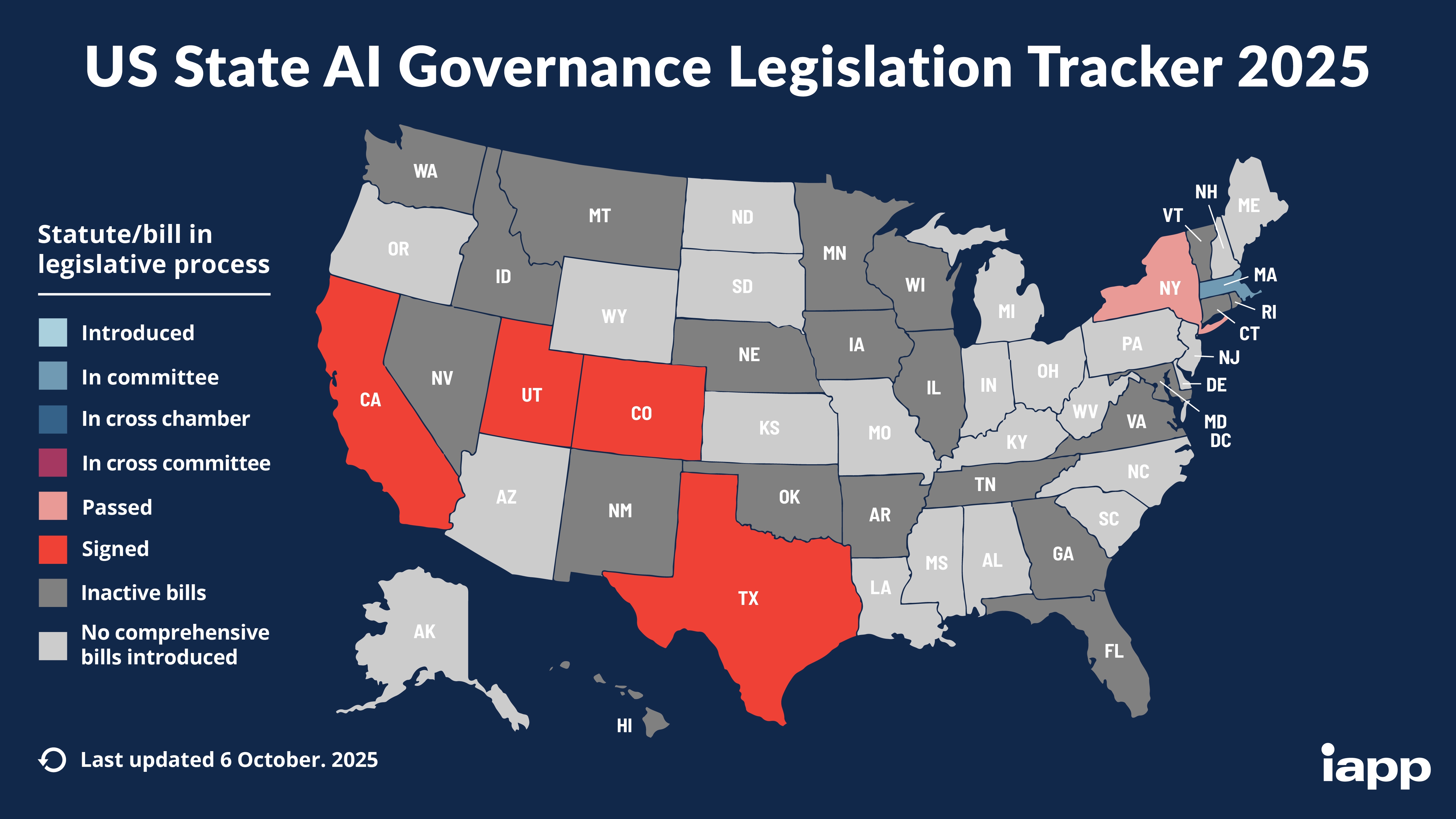
US State AI Governance Legislation Tracker

This tracker focuses on cross-sectoral AI governance bills that apply to private sector organizations.
Contributors:
David Botero
Westin Fellow
IAPP
Cobun Zweifel-Keegan
CIPP/US, CIPM
Managing Director, D.C.
IAPP
As with seemingly every aspect of AI, legislative activity related to potential AI risks and harms has moved with unprecedented speed. Often it can take decades for policymakers to begin responding to new technologies with targeted laws. But after generative AI captured the world's attention, it took only a matter of months for U.S. state legislatures to consider responsive legislation. States are not waiting for federal action, instead adopting a remarkably active stance on regulations responding to concerns around many different types of AI systems and contexts.
Unpacking the themes of these legislative efforts is an ongoing undertaking. To help keep track of this rapidly changing landscape, the IAPP has published this tracker, which collates legislative activity and reflects emerging themes across AI governance policymaking at the U.S. state level. This information is compiled into a chart, map and directory with information specific to states with enacted laws.
Over the past few years, state responses have varied widely, reflecting the multifaceted challenges AI poses across legal domains. Initial legislative efforts focused on state government use of AI, with states creating new safeguards or outright bans on high-risk governmental AI applications. Other states have focused on implementing studies and task forces to assess AI’s risks and benefits before rushing to new regulations. The recent surge in generative AI has shifted legislative attention to commercial AI guardrails. These efforts typically fall within consumer protection law and aim to amend state legal codes accordingly. This tracker serves as a resource to monitor these developments.
State AI governance law directory
Private sector AI governance laws
- Assembly Bill 2013
Effective date: 1 January 2026 - Senate Bill 942
Effective date: 1 January 2026 - Senate Bill 53
Effective date: 1 January 2026
Private sector AI governance laws
- Colorado AI Act
Effective date: 1 February 2026
Private sector AI governance laws
- Responsible AI Safety and Education Act
Effective date: 1 January 2027
* To be amended per agreement with Governor, consistent with A9449 and S8828
Private sector AI governance laws
- Utah AI Policy Act
Effective date: 1 May 2024 - Senate Bill 226
Effective date: 7 May 2025
Private sector AI governance laws
- Texas Responsible Artificial Intelligence Governance Act
Effective date: 1 January 2026
If you are aware of a state AI governance bill absent from the tracker, please share it with us at research@iapp.org.
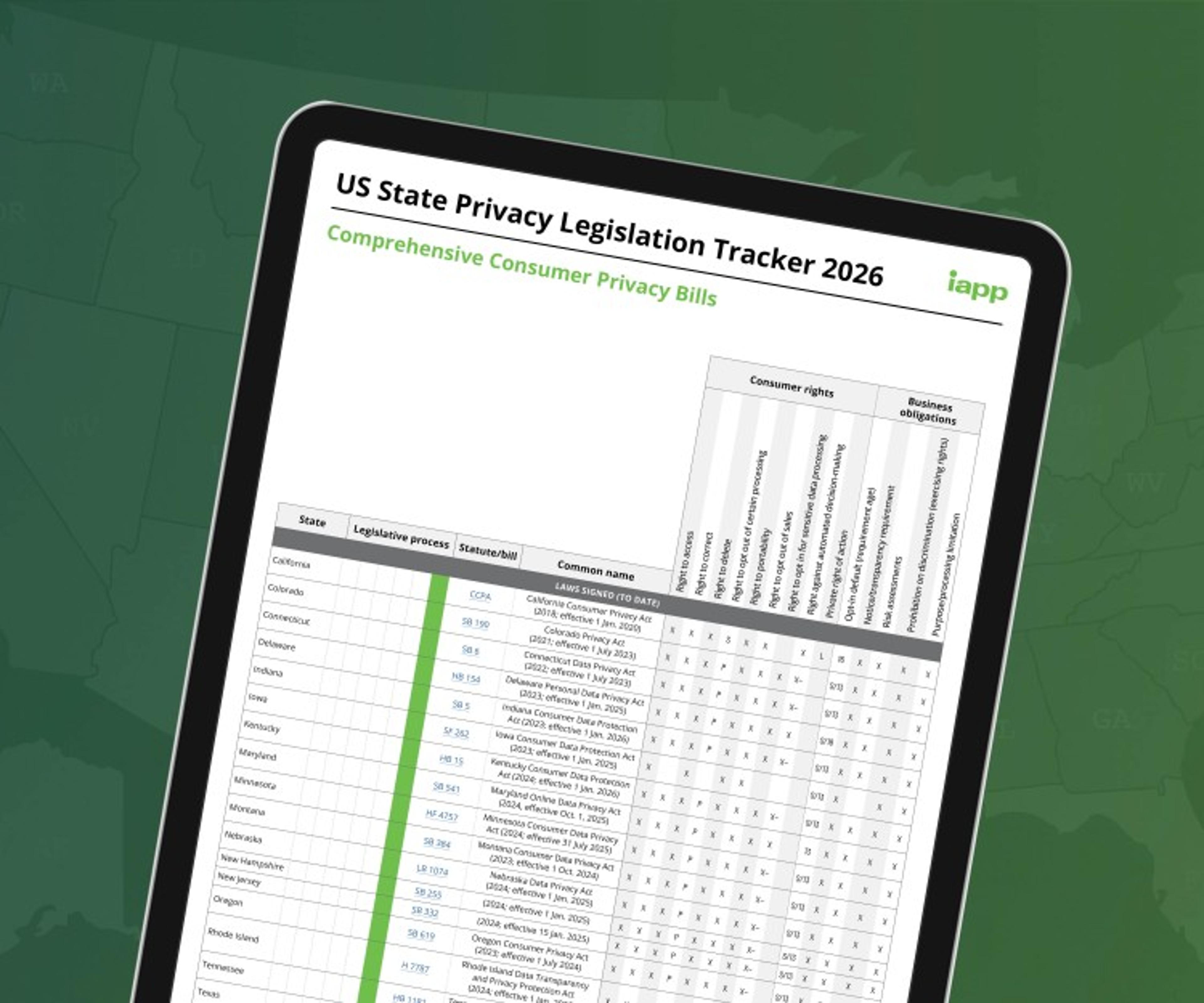
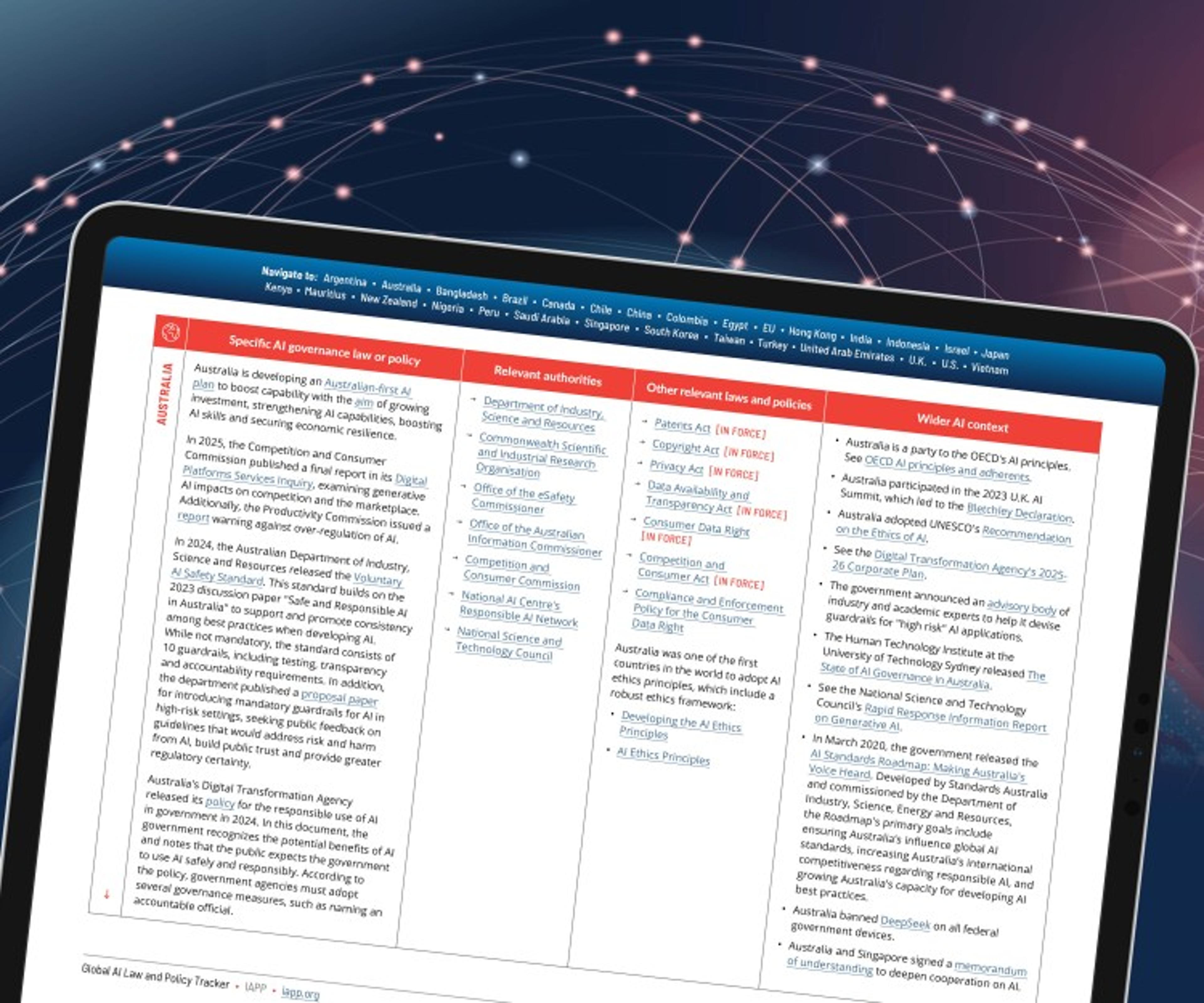
The IAPP additionally hosts a US State Privacy Legislation Tracker, which tracks comprehensive US state privacy bills, and Global AI Law and Policy Tracker, which identifies AI legislative and policy developments in a subset of jurisdictions.
The state AI governance law chart is curated to spotlight legislation directly impacting private sector organizations, excluding government-only bills. While such standards influence AI policy, they generally do not impose immediate obligations on private sector organizations. Sectoral AI activities, despite their significance, are also omitted from the chart due to their limited scope.
The chart instead focuses on broadly applicable laws affecting various types of AI systems. This approach acknowledges the complexity of crafting comprehensive AI governance legislation that addresses the spectrum of risks associated with diverse AI applications. The chart features a scope column to indicate the types of AI systems each bill covers, ranging from generative AI to automated decision-making systems. It also categorizes obligations into broad themes, clarifying which provisions apply to developers and deployers. However, the legislative text can vary significantly, so a check mark in the chart does not imply identical obligations across proposals.
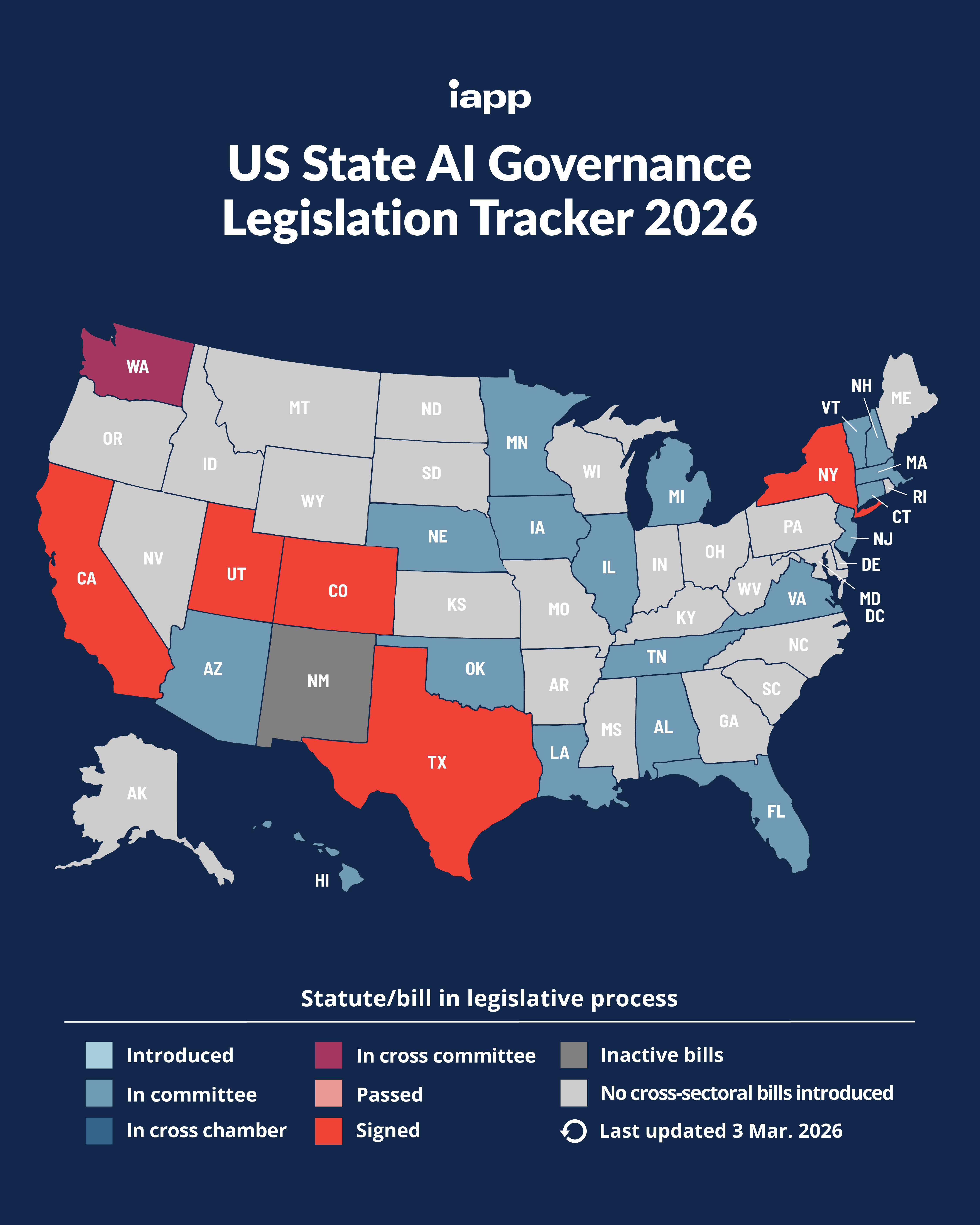
The map tracks the status of statutes and bills that are enacted or in the legislative process.
This content is eligible for Continuing Professional Education credits. Please self-submit according to CPE policy guidelines.
Submit for CPEsContributors:
David Botero
Westin Fellow
IAPP
Cobun Zweifel-Keegan
CIPP/US, CIPM
Managing Director, D.C.
IAPP
Tags: