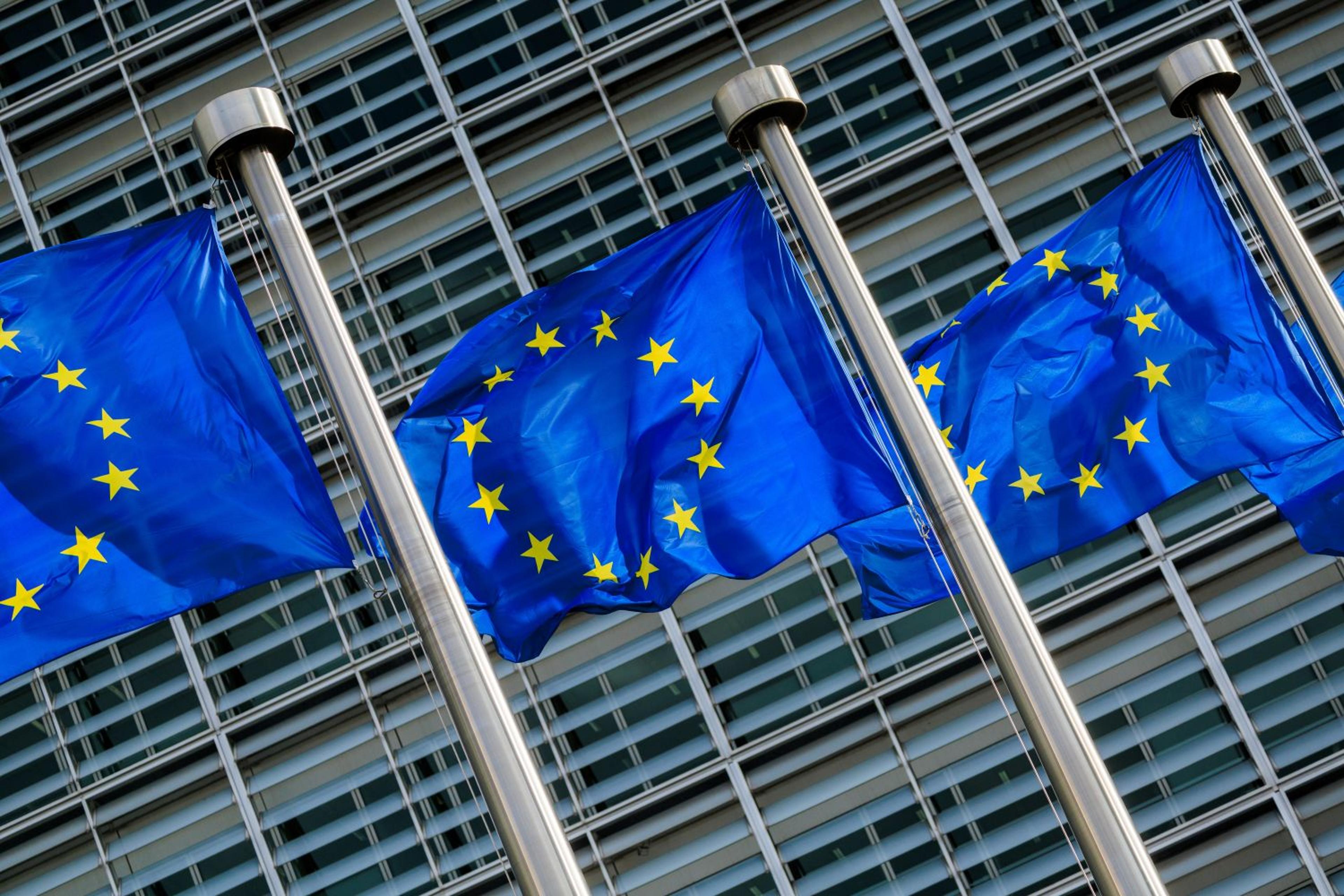
A view from Brussels: To ban or not to ban

The European Commission is likely to propose new legislation this summer around banning or restricting children's social media access, raising hard questions about feasibility, age verification and how new rules would fit within an already dense regulatory framework.
Contributors:
Isabelle Roccia
CIPP/E
Managing Director, Europe
IAPP
Editor's note
The IAPP is policy neutral. We publish contributed opinion pieces to enable our members to hear a broad spectrum of views in our domains.
That is the question. "Whether 'tis nobler in the mind to suffer the slings and arrows of outrageous fortune, or to take arms against a sea of troubles and by opposing end them." Hamlet's introspection as he debates whether to choose death over suffering is among the most famous Shakespeare soliloquies. It is profound, bare of frivolity. One trait that makes it so Shakespearian is its weaving of concepts that oppose one another.
Shakespeare's work may feel overly dramatic, but it resonates with a contemporary dilemma increasingly moving our community: whether to ban access to social media for children. What was created to connect and expand horizons is now looked at through the prism of a ban, keeping the vulnerable away from it.
Society at large supports setting minimal ages for social media use, yet the conversation is unbelievably complex. It is at the crossroads of policy and lawmaking, from privacy to law enforcement, societal issues, technology, education and cerebral development.
In the EU alone, from Greece to France, Denmark to Spain, reportedly nine European governments are taking a firmer hand and considering or already advancing proposals to require a minimum age for social media use.
This dynamic is forcing the European Commission to seize the issue more visibly. President Ursula von der Leyen delivered her speech to that effect at this week's European Summit on Artificial Intelligence and Children. She announced a legislative proposal could come this summer, depending on the upcoming recommendations of the special panel of experts on child safety online."
Let's lay the politics first. There may not be a lot of maneuver room politically for the Commission to do anything but propose a new piece of legislation. Failing to do so will inevitably lead to member states going at it their own way and at their own speed, creating a fragmented solution to a common problem.
A public outrage is also likely, even if the debate calls for nuances and a fact-based conversation about the feasibility and appropriateness of solutions at stakeholders' disposal to deliver on the policy objective — which has yet to be clearly defined, by the way. It is therefore telling that it these signals are coming from the Commission president herself.
In all fairness, the Commission has been working on it for some time with various mechanisms. Back in June 2024, the Commission presented its plans regarding age-verification solutions, announcing it would propose an 18-plus age verification app in the first half of 2025. That app was presented in early 2026, receiving mixed reviews from a technological perspective. But in a way, this was beside the point. By carrying through its plans, the Commission is starting to affirm a vision and assert its mandate in an area where it has been struggling to cope with some member states' own political calendars and ambitions.
The corpus is also quite dense already. The EU General Data Protection Regulation is an obvious instrument. Also, the Digital Services Act's Article 28 requires that providers of online platforms accessible to minors put in place "appropriate and proportionate measures" to ensure a high level of privacy, safety and security of minors and do not serve them profiling-based ads — on a best effort basis.
Many other instruments feed that toolbox: the Artificial Intelligence Act and AI Omnibus to some extent, the European Digital Identity Framework regulation, the EUDI Wallet age-verification app, the General Product Safety Regulation, the Audiovisual and Media Services Directive, the Strategy on Combatting Trafficking in Human Beings, or the proposed Regulation to Prevent and Combat Child Sexual Abuse and the EU Action Plan against cyberbullying, only to name a few.
It will be important to follow signs leading to the summer period and a potential, dare I say likely, Commission announcement. Whatever its form, it would raise major questions: how would this proposal square with the existing corpus of rules; what would it mean for the design and drafting of the future Digital Fairness Act, which is expected to address adjacent issues; and what would be the types of operators concerned and the level of expectations upon them, at a time when no technological, operational or legal solution is a straightforward silver bullet.
This article originally appeared in the Europe Data Protection Digest, a free weekly IAPP newsletter. Subscriptions to this and other IAPP newsletters can be found here.

This content is eligible for Continuing Professional Education credits. Please self-submit according to CPE policy guidelines.
Submit for CPEsContributors:
Isabelle Roccia
CIPP/E
Managing Director, Europe
IAPP