US Supreme Court weighs privacy implications of geofence warrants
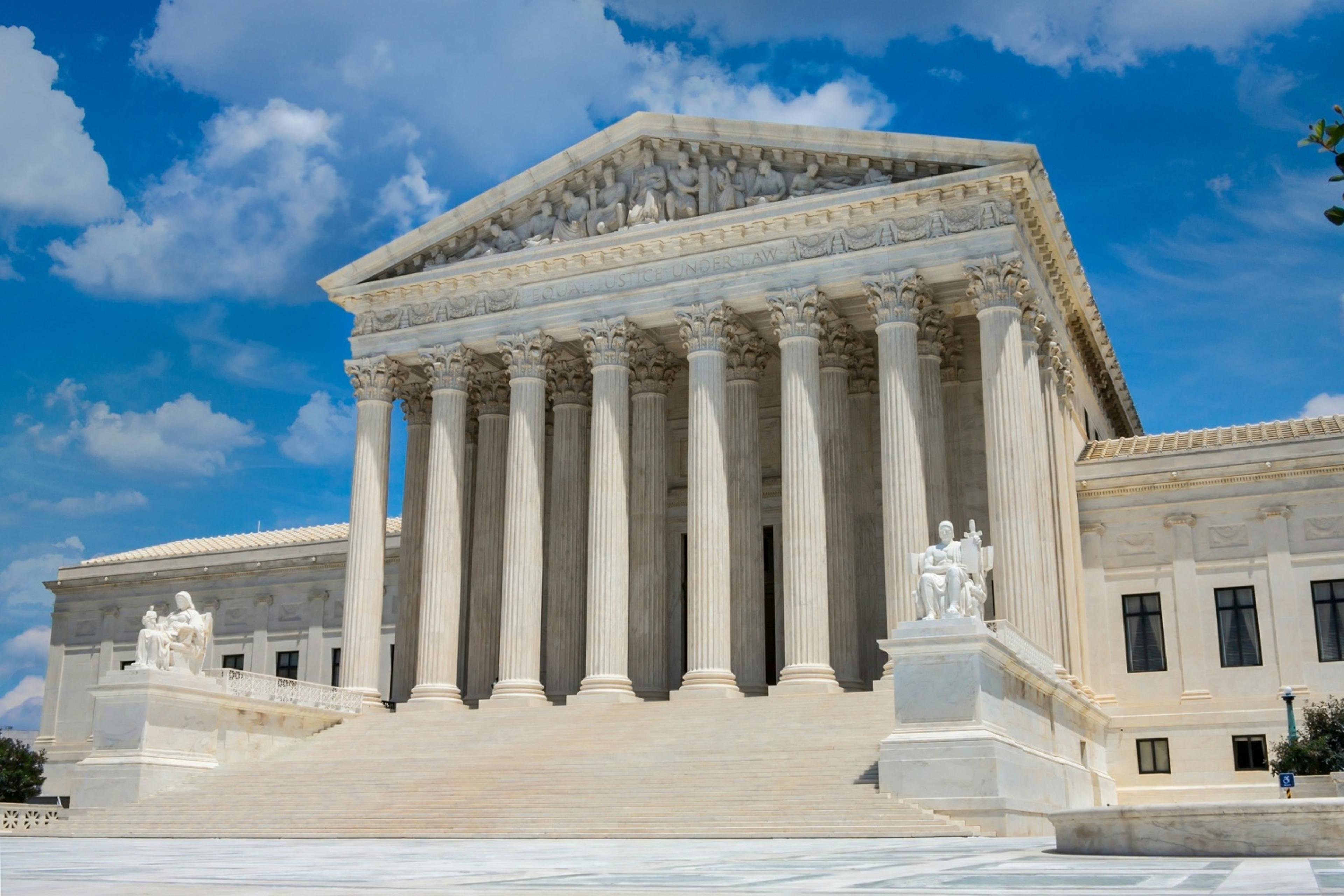
Oral arguments covered whether location data shared with law enforcement agencies through geofence warrants violate Fourth Amendment rights.
Contributors:
Lexie White
Staff Writer
IAPP
The U.S. Supreme Court appeared divided while weighing the constitutionality of geofence warrants to allow law enforcement agencies to request technology companies to identify devices located within a specific geographic area.
During oral arguments 27 April, the court considered whether law enforcement's use of location history data violates the Fourth Amendment's protections against unreasonable searches and general warrants.
Chatrie v. United States, was brought by Okello Chatrie after he was identified and convicted of a 2019 bank robbery following law enforcement's use of a geofence warrant that required Google to provide the location data of individuals in the area at the time of the crime.
Justices heard arguments around whether consumers inherently consent to data sharing by enabling certain device settings while wrangling with concerns about the scope of law enforcement's access to personal data.Geofencing concerns
Law enforcement's use of geofence warrants could allow individuals' data to be shared with law enforcement even if they are not associated with a crime.
Delivering Chatrie's argument, Jenner and Block Partner Adam Unikowsky told the court the warrant issued could be considered a general warrant, allowing the government to obtain sensitive personal data without probable cause. He said the warrant violated the Fourth Amendment because Chatrie "had a reasonable expectation of privacy in his location history, given both its sensitive and revealing nature and the fact that it was stored in his password protected account."
In response to the warrant, Google provided law enforcement with data from 19 devices, and later offered additional location data on nine individuals.
"Even if the search materialized only when the data was found and exposed to the police, the warrant would still be unconstitutional, because there was not probable cause to search the virtual private papers of every single person within the geofence merely because of their proximity to the crime," Unikowsky said.
In the government's argument, Deputy U.S. Solicitor General Eric Feigin noted consumers have the choice to disable location settings that could allow their geographic data to be shared with law enforcement for investigations.
The petitioner's interpretation of the Fourth Amendment protections around geofence warrants "would make that fortress so impregnable," according to Feigin, to the point that "not even a judge's warrant for even a moment of the public location of someone who, again, affirmatively opted to allow Google to have those records and to access them would be available to law enforcement."
He also argued restricting access to location data would impact law enforcement's ability to investigate crimes where location information may be one of the only tools available.
SCOTUS stance
Despite conflicting opinions, court justices focused on the constitutionality of how geofence warrants are executed and standards governing how law enforcement could expand its searches to obtain sensitive information.
They showed skepticism over the petitioner's broad characterization of geofence warrants as general warrants while noting how consumers have the right to opt out of data collection.
Associate Justice Samuel Alito argued if consumers "don't want the government to have your location history, you just flip that off. You don't have to have that feature on your phone. So, what's the issue?"
While consumers have the ability to turn off location sharing, Chief Justice John Roberts highlighted the implications for sensitive information disclosures when consumers' location data is collected and processed.
"What's to prevent the government from using this to find out the identities of everybody at a particular church, a particular political organization," Roberts said. "What are the restraints that would prevent that from becoming a problem?"
Roberts asked Feigin if, to prevent surveillance concerns, companies "have to rely on the fact that people are going to turn off something that many, if not most people, find is an important service?"
Associate Justice Neil Gorsuch noted the scope of data collection and whether a decision in favor of the petitioner could extend beyond location data to other types of information stored by third-party providers,
Gorsuch questioned whether "there was a voluntary exposure here to Google that allows the government unfettered access to it" and if that ruling "would pertain equally to email."
The Supreme Court is expected to render a final decision on the case by July.

This content is eligible for Continuing Professional Education credits. Please self-submit according to CPE policy guidelines.
Submit for CPEsContributors:
Lexie White
Staff Writer
IAPP