US Energy and Commerce Committee advances KIDS Act to full House vote
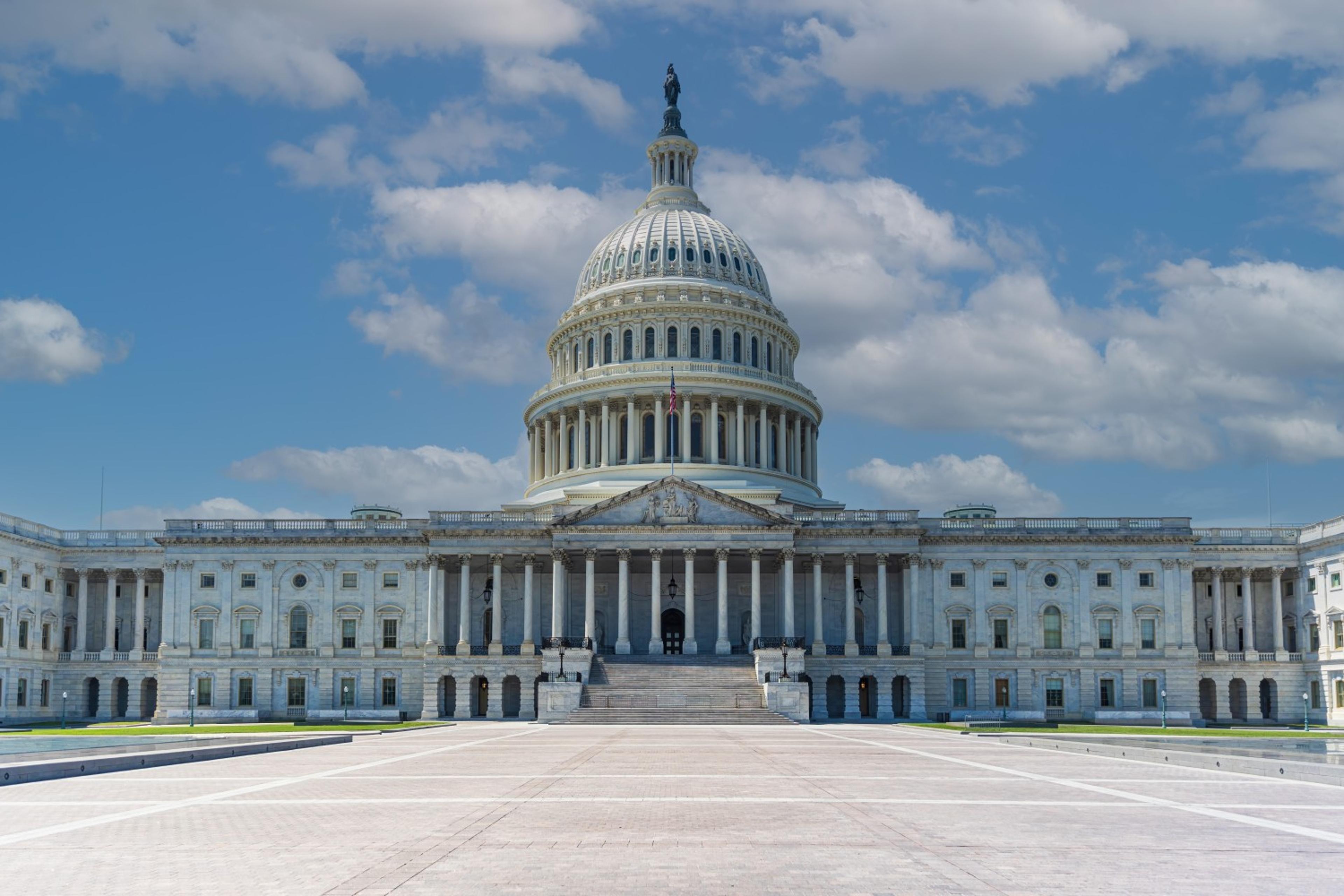
U.S. House Energy and Commerce Committee votes to advance KIDS Act to a full vote in the House.
Contributors:
Alex LaCasse
Staff Writer
IAPP
The U.S. House Committee on Energy and Commerce adopted multiple children's online safety bills during a 5 March markup session that will receive a full House vote.
The bills on the committee's docket were House Resolution 7757, the Kids Internet Digital Safety, or KIDS, Act; House Resolution 2657, also known as Sammy's Law; House Resolution 3149, the App Store Accountability Act, and five other bills aimed at improving the cybersecurity of various critical infrastructure components.
The KIDS Act contains some, but not all, pieces of legislation passed in the Commerce, Manufacturing and Trade subcommittee in December of last year, like the Safe Bots Act and the No Fentanyl on Social Media Act. Most notably, the House version of the Kids Online Safety Act was integrated into Title 2 of the KIDS Act.
Sammy's Law is named in memory of a 16-year-old who died after soliciting a fentanyl-laced pill through social media. It requires social media platforms to contract third-party child safety firms that would screen minor users' accounts for communications they may have engaged in dangerous behavior, such as self-harm or drug use, and alert their parents.
The App Store Accountability Act would require age verification to download applications from app stores. Users under age 18 would be required to obtain parental consent to download age-restricted apps, while creating enforcement mechanisms.
Partisan reaction
Democratic committee members complained the KIDS Act contained broad state law preemption and lacked strong knowledge standards on the part of technology companies. Despite their objections, Republicans in the majority passed the KIDS Act along party lines, in addition to both the App Store Accountability Act and Sammy's Law.
However, the Democrats joined Republicans to unanimously pass the cybersecurity infrastructure bills.
The KIDS Act largely generated the most buzz among committee members. Democrats attempted to unsuccessfully reintroduce amendments eliminating preemption language and re-imposing stronger knowledge standard requirements for each law contained within the larger KIDS Act package over the course of several hours.
U.S. Rep. Frank Pallone, D-N.J., said he was "disappointed" the two sides could not come to an agreement on a bipartisan framework for the KIDS Act. He claimed "Republicans are handing Big Tech a giant gift by walking away from the stronger preemption standards that were previously included in these bills," while the new knowledge standard contained in the KIDS Act was a "giant loophole" for Big Tech.
"I have engaged in aggressive bipartisan talks with Chairman (Brett) Guthrie and his staff to address the risks children and teens face as they live increasingly digitally centered lives," Pallone said during the hearing. "The new preemption standards are inadequate to allow states to pass stronger laws to do more to protect kids … (The knowledge) standard allows tech companies and companies that collect kids' data to continue to claim that they lacked actual knowledge or willfully disregarded knowledge that kids are using their platforms."
U.S. Rep. Gus Bilirakis, R-Fla. said the KIDS Act represents "the most comprehensive online safety package" the Energy and Commerce Committee has put before the full House of Representatives. With specific regard to KOSA, Bilirakis said it limits addictive design features, restricts geolocation features for minors and turns off "algorithms by default" on kids' devices.
"(The KIDS Act) is a combination of years of hearings, evidence gathering, heartfelt testimony and the social media questioning this committee led under several chairs in the past," Bilirakis said. "We've all heard the stories that in a matter of days, kids can be sucked into an algorithm that twists (their) innocent views into promoting violence or drug use or self-harm or eating disorders — KOSA puts an end to this model. We have a great package here … that is going to go a long way to protecting kids and reducing the online harms we have all seen."
COPPA 2.0 status?
The markup session was not the only children's online safety measure Congress adopted 5 March as the Senate unanimously passed the Children and Teens Online Privacy Act, otherwise known as COPPA 2.0, according to Politico.
The House version of COPPA 2.0 was originally slated to be part of the Energy and Commerce Committee's markup; however, Rep. Brett Guthrie, R-Ky., the committee chairman, pulled the bill and announced that over the course of the hearing there had been "substantial progress" in negotiations among the staffers from both sides to work toward a bipartisan agreement. He did not provide a date for when the House COPPA 2.0 bill would have a markup session before the full committee.
"All of us want to protect kids," Guthrie said. "Our staffs have continued to work toward a bipartisan agreement ... Our staffs will continue to work in the coming days."

This content is eligible for Continuing Professional Education credits. Please self-submit according to CPE policy guidelines.
Submit for CPEsContributors:
Alex LaCasse
Staff Writer
IAPP