EU AI sovereignty top of mind during AIGG EU's opening keynote session
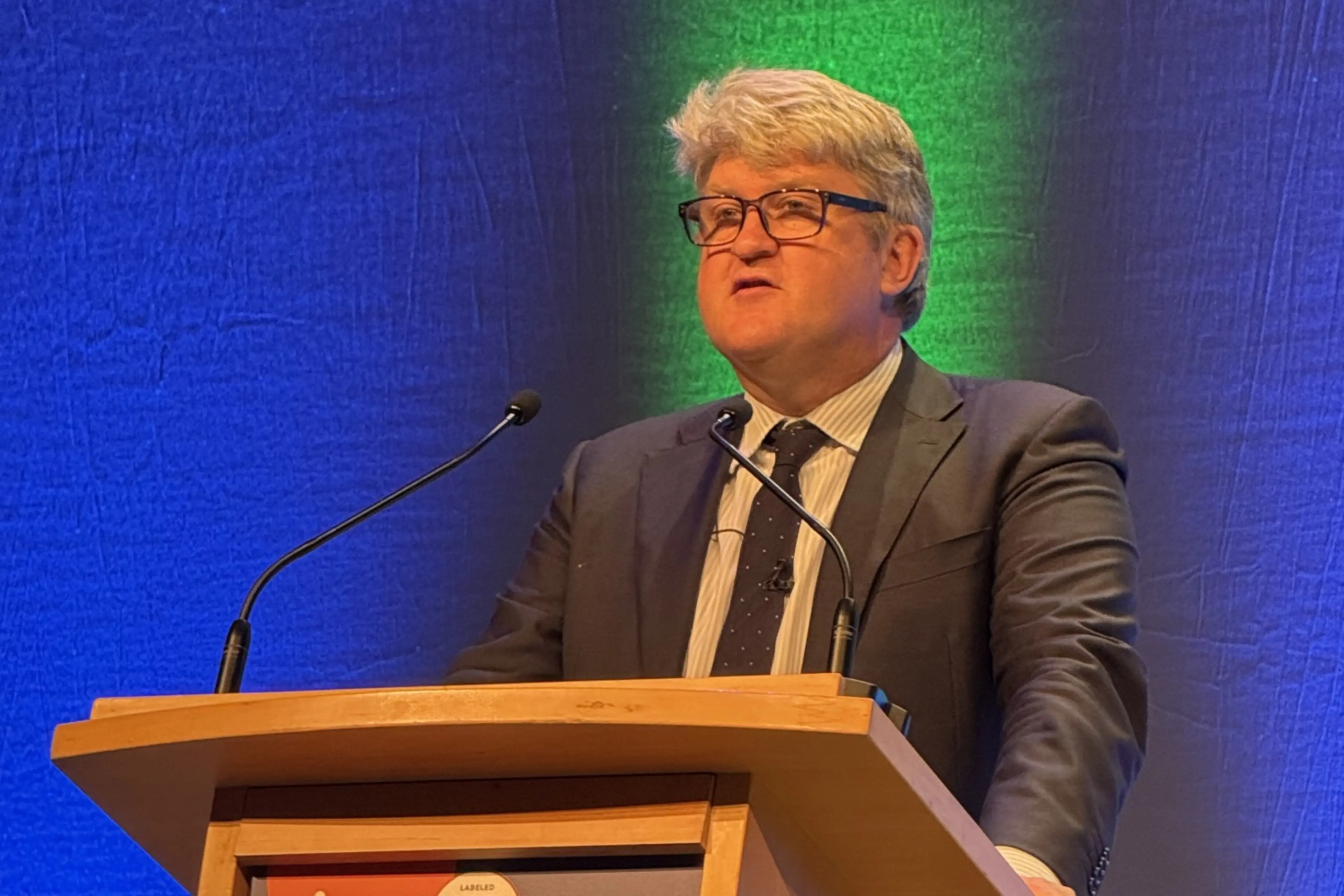
European officials and AI leaders in Dublin signaled a growing shift from AI regulation toward technological sovereignty, as Brussels unveiled a sweeping new package on chips, cloud and AI infrastructure.
Contributors:
Jedidiah Bracy
Editorial Director
IAPP
As governments and global markets react to rapidly developing artificial intelligence models, Europe is increasingly moving beyond its regulatory model toward concerns around its digital sovereignty. This was very much a theme during Wednesday's opening general session at the IAPP AI Governance Global Europe 2026 conference in Dublin, Ireland. It was also made plain hours later with the European Commission's announcement of a newly proposed European Technological Sovereignty Package.
"Who honestly believes regulation is what is truly holding back AI in Europe?" Irish Member of European Parliament and rapporteur on the AI Omnibus Michael McNamara asked during his opening keynote address.
McNamara asked the question after narrating the behind-the-scenes pressure EU institutions felt during the trilogue process for the AI Omnibus, which, among several items, moved back some compliance deadlines for high-risk AI systems. He said looking "past compliance deadlines, we confront a deeper question on the future of AI development in Europe."
"From where I stand," he said, "Europe's problems are not about burdens around the AI Act or the General Data Protection Regulation. They're about compute, capital and energy."
McNamara said Europe holds roughly 5% of global compute capacity. Venture capital remains "fragmented compared to the United States," and money being invested in Europe "is insignificant comparatively to the levels of funding available elsewhere, which is why our startups still move abroad."
Europe also faces "structural energy constraints that no amount of deregulation, simplification and so on can solve," he said, and the bloc lacks the infrastructure to power approved data centers needed for frontier models.
These developments are taking place against a "geopolitical background in which the United States is moving toward protectionism. China is expressing serious concerns about restrictions and infrastructure rules. So, Europe's challenge is charting a path toward sovereignty in a landscape where it currently depends on others for the foundational layers of AI," McNamara said.
The EU AI Office and AI Act implementation
Lucilla Sioli, who serves as director of the EU AI Office within the European Commission, drew upon McNamara's comments, noting, "The European Commission has made a strong commitment to becoming an AI continent" and that it "has the capacity to catch up (with China and the U.S.) in certain strategic areas."
"We now have policies in motion to make sure that we have the right infrastructure, access to data and the ability to accumulate the talent that currently often leaves Europe," she said. The bloc is upgrading supercomputers with AI capabilities and drafting plans to develop AI factories and gigafactories. It is also working to increase EU-cloud capacity, investment in semiconductors and retaining talent.
"For us, the AI Act is not opposed to innovation," she said. "It is very much about enabling adoption because people need to trust the technology."
Sioli said the Commission is working to produce guidelines and a Code of Practice "to help companies understand and implement the AI Act." Plus, the AI Pact "encourages organizations to begin voluntary compliance before legal obligations fully apply."
One competitive advantage for Europe, according to Sioli, can be seen in healthcare, "where we do not want hospitals simply to 'buy AI,' but to adopt AI in ways that improve treatment and make systems more efficient."
Many eyes are on the AI Office as it works to implement the AI Act and monitor the development of general-purpose AI. "We want to make sure that AI develops in ways that respect European values and fundamental rights," she said. The office is also looking at labor impacts and monitoring changes in professions and skills across the continent.
The office, she said, also features an AI Act service desk to help companies with implementation challenges. Any recurring issues can then be integrated into future guidance documents.
With the recent emergence of Anthropic's Mythos model, which can identify and test critical cybersecurity vulnerabilities at scale, Sioli said she sees a shift in attitude. "When we hear about new powerful models and increasing capabilities, it reinforces the importance of making sure that risks are properly addressed before these systems enter the European market," she said. "This is why the Code of Practice remains important, because it helps companies identify and manage risks."
Looking ahead, Sioli said the office will organize initiatives around AI, including events that focus on talent and innovation. Other AI-focused events will feature activities around the AI Factories initiative and innovation more broadly.
Commission moves to bolster Europe's tech sovereignty
AIGG's opening keynotes closely paralleled and preceded breaking news from the European Commission, which released its tech sovereignty package, including a set of measures to strengthen the bloc's capacity in semiconductors, AI, cloud and open source.
"We cannot afford to depend on others for the technologies that keep our hospitals running, our energy grids stable and our services secure," Commission President Ursula von der Leyen said. "This is about protecting our citizens, defending our interests and making our own choices. Europe has the talent, the research excellence, the industrial base and the Single Market. Together, we must turn these strengths into technological sovereignty."
The package includes two legislative proposals, a strategy and roadmap.
The Chips Act 2.0 will build capacity in cutting-edge semiconductor technologies that power AI systems. According to the Commission, the proposal will speed up permitting, bolster cooperation and introduce "a new excellence label for Europe's semiconductor regions." The legislation aims to bring European chipmakers "closer to their customers," help with the demand for more data centers, cloud providers and "AI Gigafactories," while also supporting investment and protecting supply chain risk.
The Cloud and AI Development Act is part of the Commission's AI Continent Action plan and will set a goal of tripling data center capacity in Europe over the next five-to-seven years. It will undergird research and innovation and consider climate impacts. "It will also introduce a single EU-wide framework to assess cloud and AI sovereignty, while keeping most of our market open to like-minded partners."
The Open Source Strategy aims to scale open-source alternatives in cloud, AI and cybersecurity technologies, among others. It will aim to invest in skills, startups and maintain the security of the continent's digital infrastructure, the release states.
Finally, the package includes a Strategic Roadmap for Digitalisation and AI in the Energy Sector. The initiative will "ensure that data centers are integrated into our energy system in a sustainable and transparent manner" and facilitate cooperation between the energy and digital sectors. It will also "help build sovereign and secure AI models" that are trained on European data by European companies.
Convergence around sovereignty
The package is in line with the opening AIGG EU keynote speeches in Dublin. No doubt, the EU is moving beyond regulation of Big Tech from outside its borders to develop a more independent, democratically based AI and digital tech stack.
MEP McNamara closed with thoughts on moving ahead. "Europe will have to navigate this environment and make some difficult choices. But if Europe doesn't want to just write the rules for technology, but actually own its own future, then those choices are unavoidable."
With a pending amendment package for the AI Act and now a potential trilogue process for the newly released tech sovereignty package, the EU seems geared to take on that challenge.
This content is eligible for Continuing Professional Education credits. Please self-submit according to CPE policy guidelines.
Submit for CPEsContributors:
Jedidiah Bracy
Editorial Director
IAPP